Contact us
Fortis Hospital
Sector 62, Phase 8, Mohali
Punjab - 160062
STANDING WITH YOU, ALWAYS

Sector 62, Phase 8, Mohali
Punjab - 160062
STANDING WITH YOU, ALWAYS
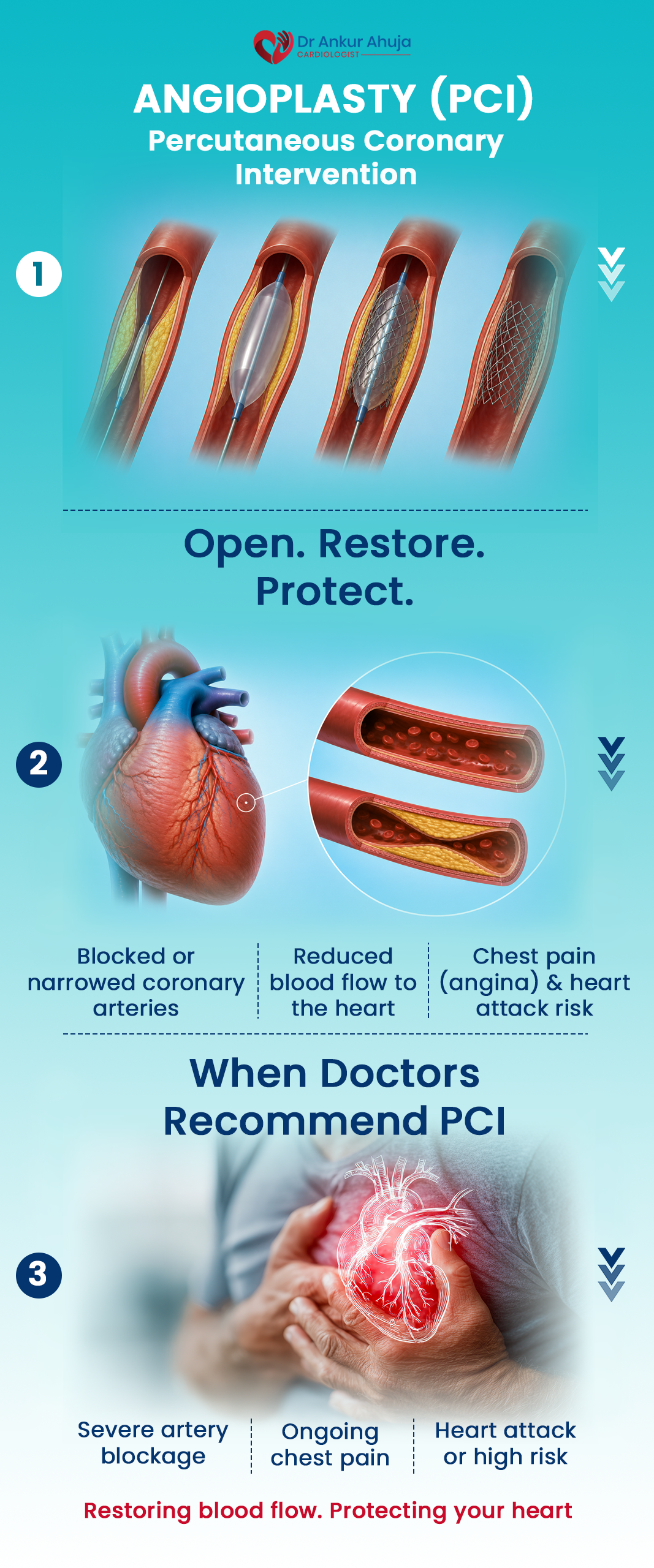
Angioplasty (Percutaneous Coronary Intervention, or PCI)
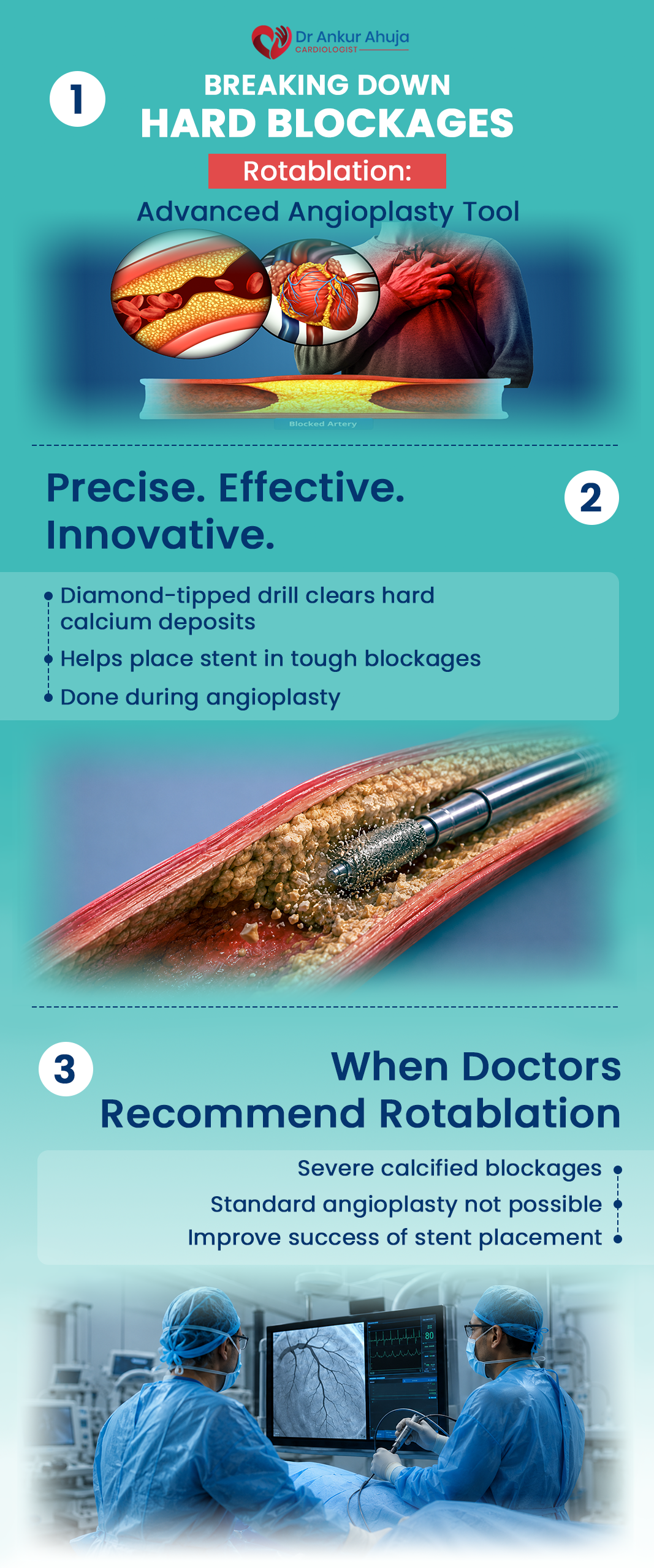
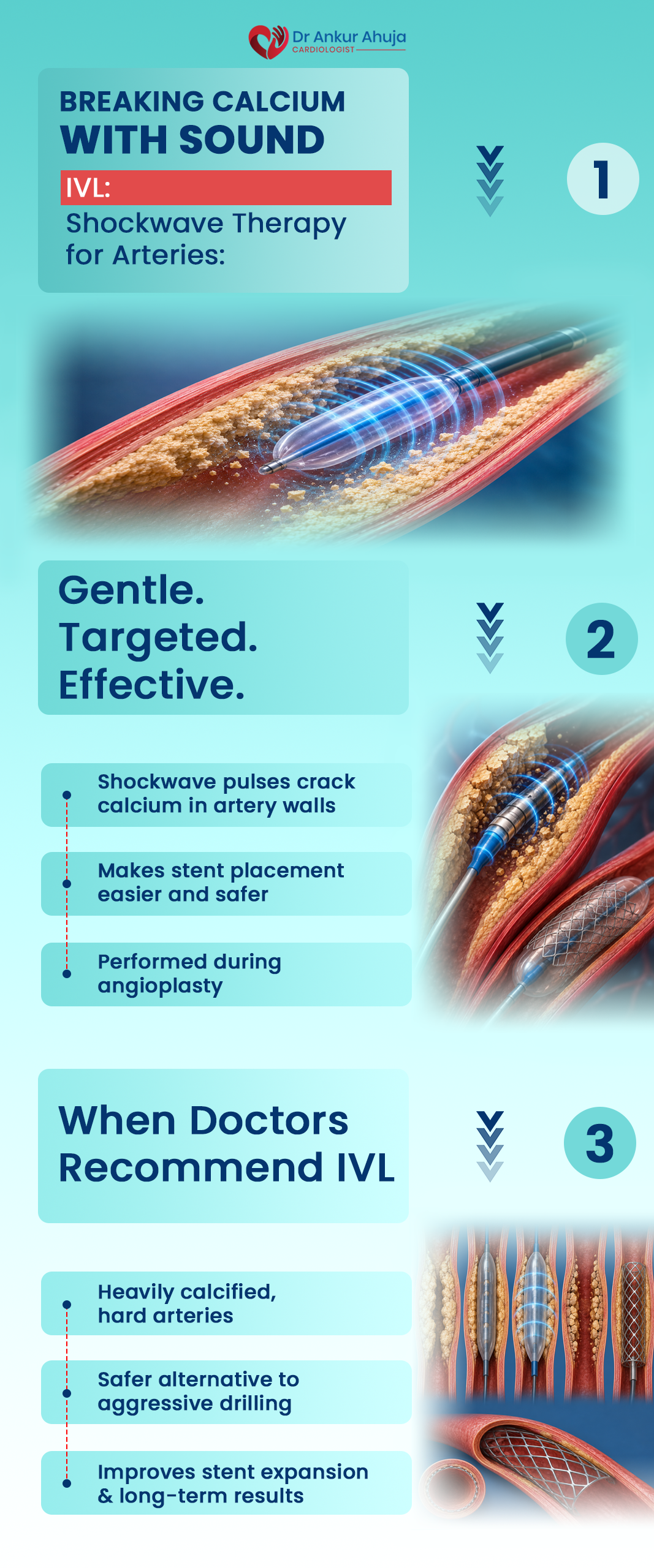
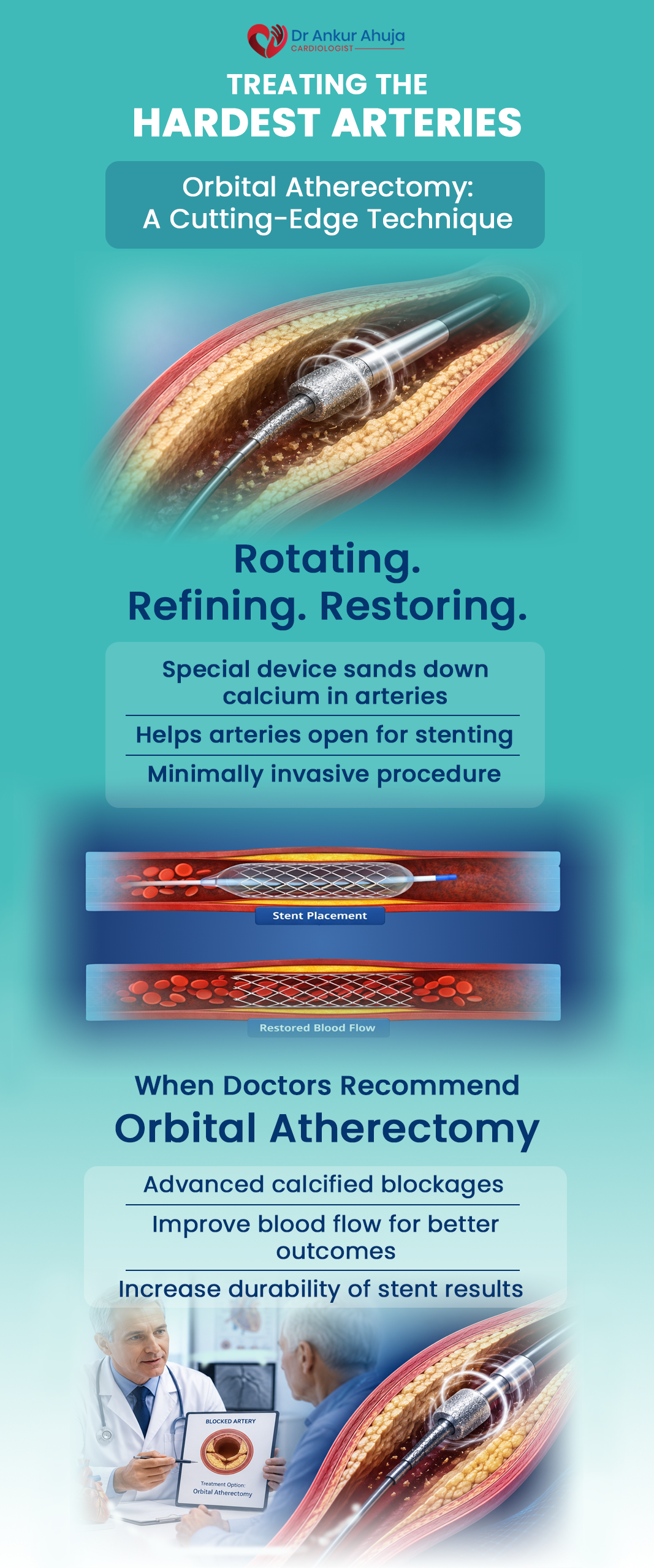
Angioplasty, also known as Percutaneous Coronary Intervention (PCI), is a treatment for coronary artery narrowing or blockage, which is frequently brought on by plaque accumulation. Angina (chest pain) or a heart attack may result from reduced blood flow to the heart caused by a blocked artery. A tiny catheter is placed through the skin, typically in the wrist or groin, and guided to the blocked artery during an angioplasty. To increase blood flow and widen the artery, a tiny balloon on the catheter is inflated at the location of the blockage. To keep the artery open, a stent—a tiny metal mesh tube—is usually inserted. Because local anesthesia is used during the procedure, you remain alert but at ease. Usually, the entire procedure takes between thirty and sixty minutes. You must fast for a few hours prior to the procedure, and your prescription may need to be changed. The majority of patients are then monitored for one to two days in the hospital. Although they are uncommon, risks can include artery damage, bleeding, or infection. Dr. Ahuja, however, takes precautions to reduce these risks and frequently uses the wrist approach to promote a speedier recovery. He will ensure that your heart health is safely and effectively managed during the procedure and recovery.
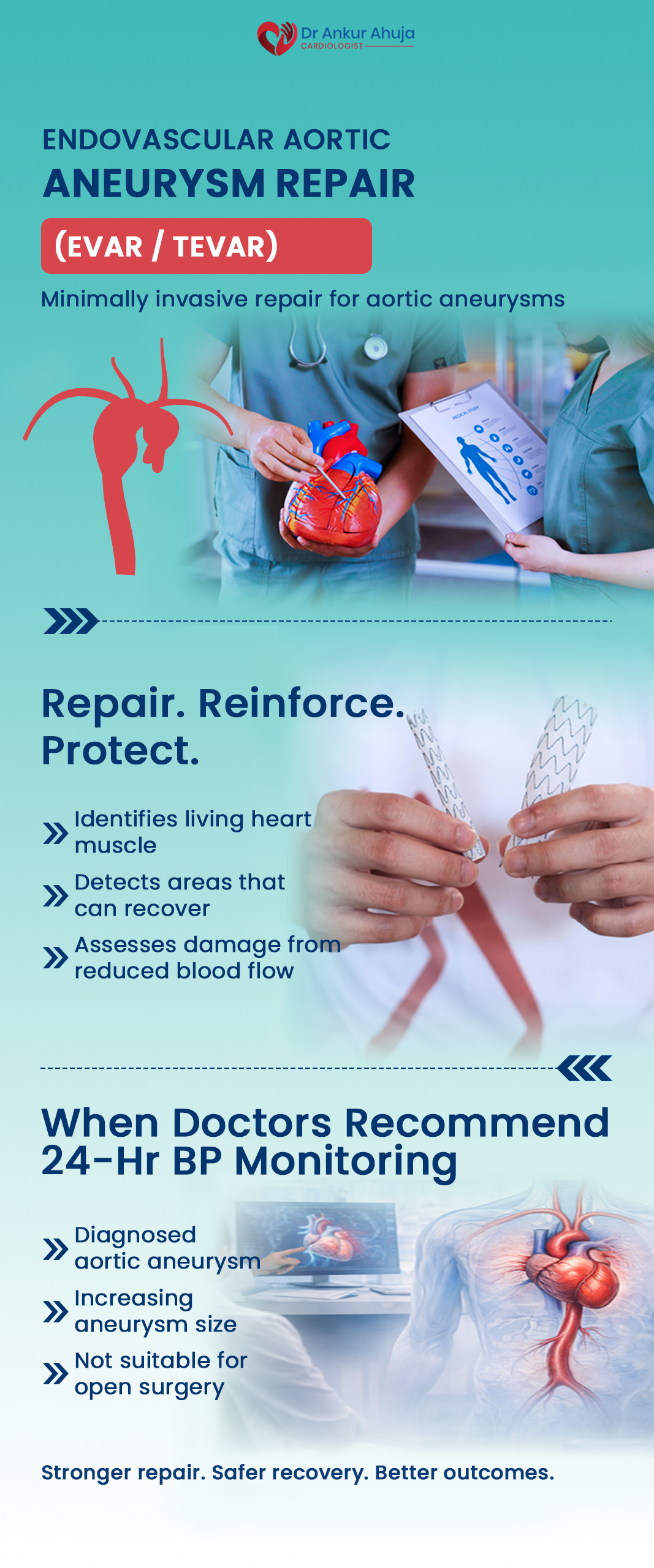
Endovascular Aortic Aneurysm Repair (EVAR/TEVAR)
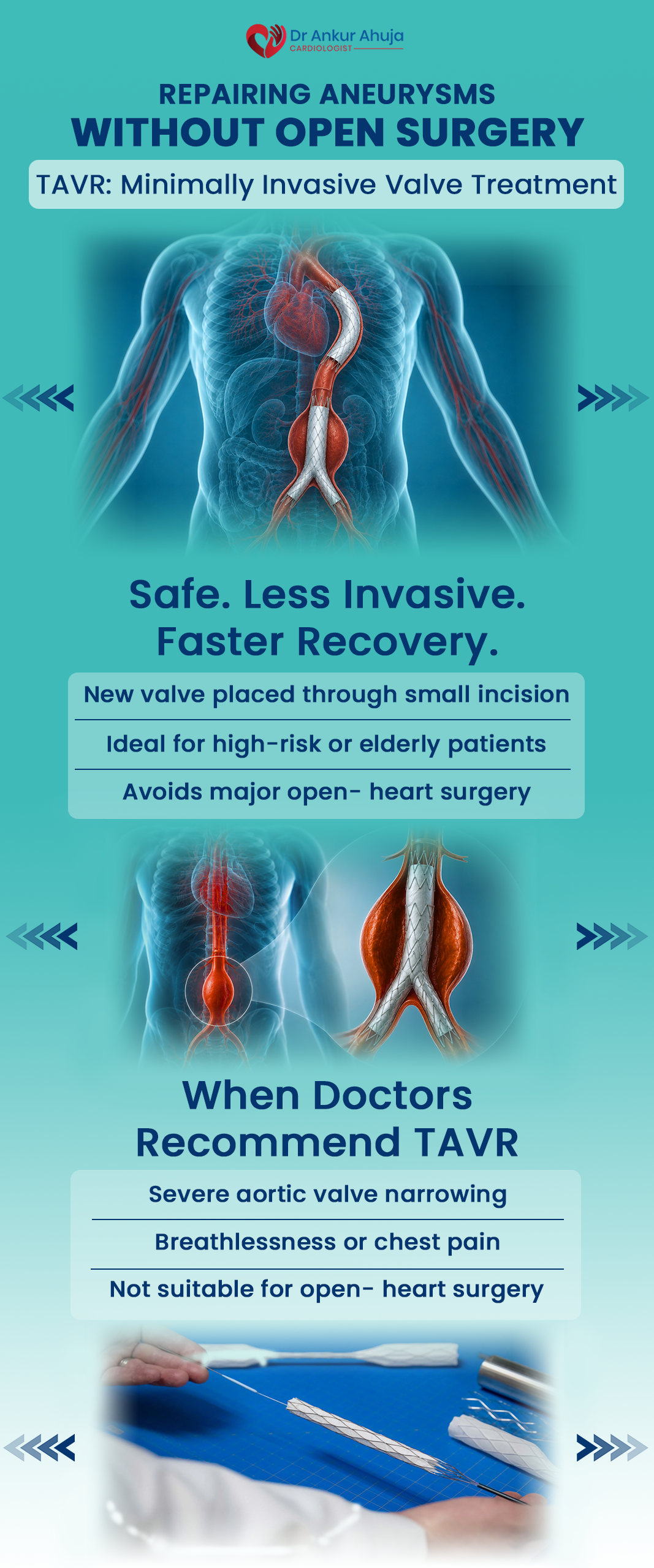
The large artery that transports blood from the heart to the rest of the body, the aorta, has bulging sections called aneurysms that can be fixed with minimally invasive procedures called EVAR and TEVAR. Aneurysms in the abdominal aorta are treated with EVAR, whereas those in the thoracic (chest) region are treated with TEVAR. In both procedures, a stent graft is inserted through a tiny incision in the groin and guided into place using a catheter. Once in position, the stent graft aids in strengthening the aorta’s weak spot and keeps it from rupturing. Under general anesthesia, the procedure usually takes one to two hours to complete. Imaging tests such as CT scans to map the aneurysm are part of the preparation process, and you might need to fast beforehand. Following the procedure, you will typically remain in the hospital for one to two days for monitoring. Despite the possibility of bleeding or infection, it is much less invasive than traditional surgery, which speeds up recovery. The majority of patients get better in a few weeks and are able to resume their regular activities. In order to help you manage your recuperation for the best result, Dr. Ahuja will carefully assess your condition and select the most effective technique to repair the aneurysm.
Myocardial Perfusion Imaging(MPI), or Stress Nuclear Scan
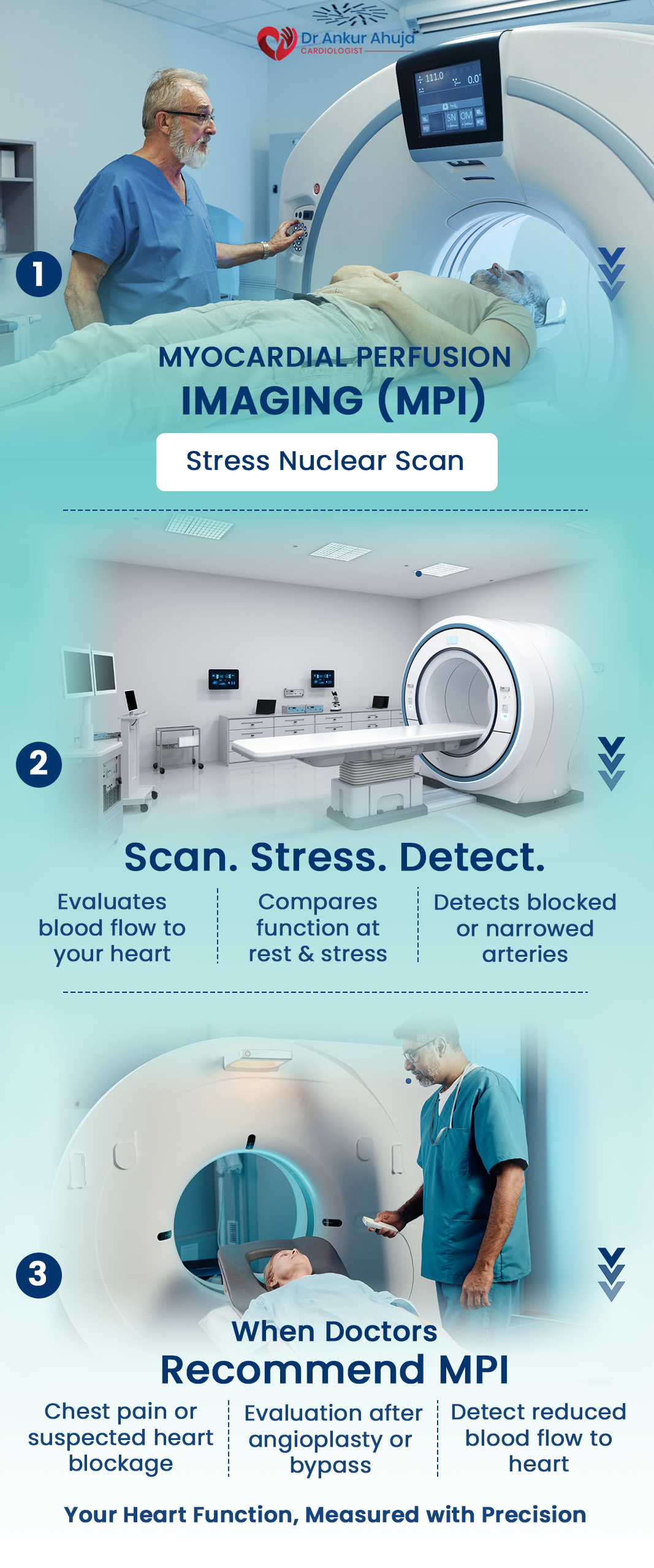
Myocardial Perfusion Imaging, also known as a Stress Nuclear Scan, evaluates the flow of blood to your heart muscle under stress and at rest. It is frequently used to assess the degree of coronary artery disease, or blocked arteries, or to monitor the effectiveness of heart surgery such as bypass or angioplasty. A tiny quantity of a radioactive tracer is injected into your bloodstream during the test. Images of your heart at rest and after stress—which may result from treadmill exercise or medication—are then captured by special cameras. Finding the parts of your heart that receive less blood flow is made easier with the help of the tracer. On test day, preparation entails avoiding caffeine and fasting for a few hours. Since pictures are taken both at rest and after stress, the test typically takes several hours to finish. There are very few risks and very little radiation exposure. This test gives Dr. Ahuja vital information about how your heart is working, which he can use to develop a targeted treatment plan that may include medication, lifestyle modifications, or more involved procedures.
Myocardial Viability PET Scan
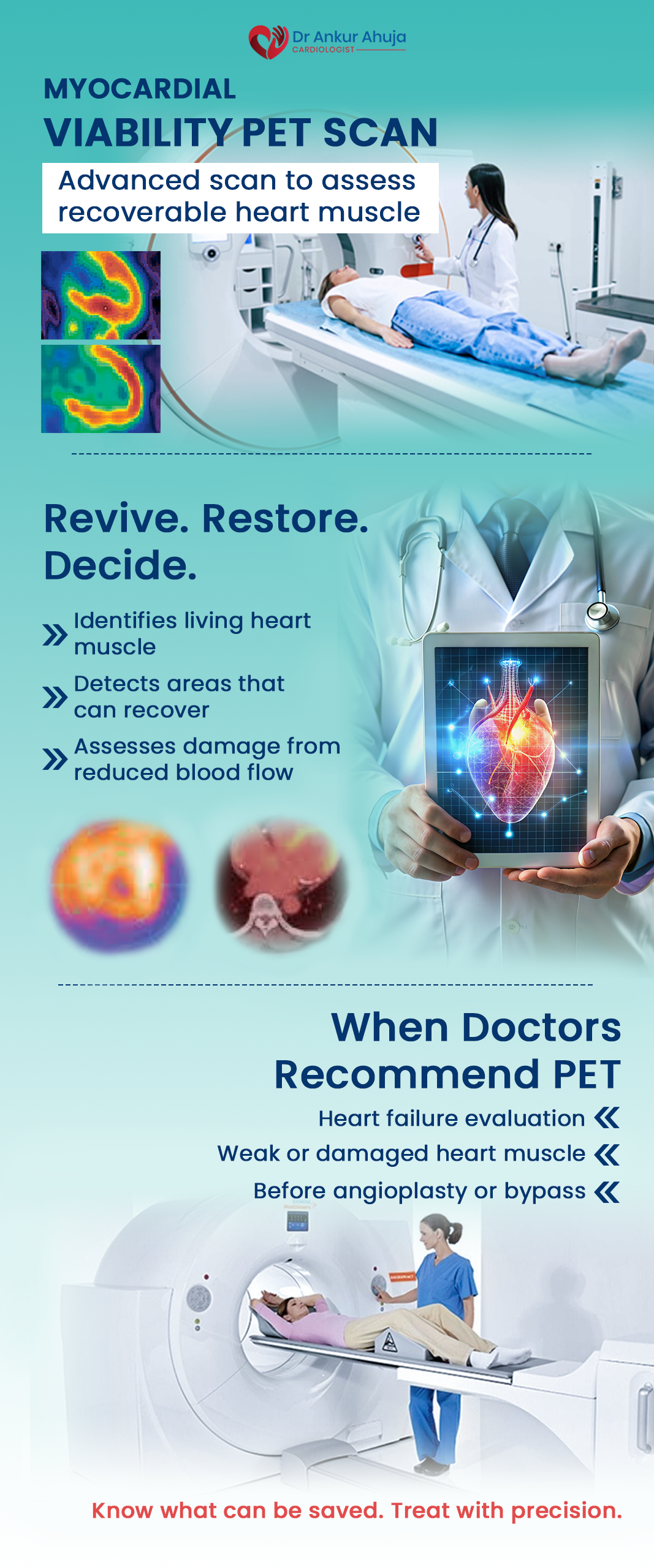
A specialized test called a PET scan for myocardial viability determines whether heart muscle that has been weakened by decreased blood flow is still viable and can recover with treatment. People with heart failure, in which certain heart muscles do not function properly, should pay special attention to this test. A radioactive tracer is injected into your bloodstream during the scan. A specialized camera takes pictures of your heart after it has had time to circulate. Areas that are still alive and could recover with improved blood flow are highlighted by the tracer. For best results, preparation entails fasting and adhering to a particular diet in advance. Although the scan is painless, it could take an hour or so to finish. Because of the minimal radiation exposure, this procedure is safe. Following the scan, Dr. Ahuja will use the results to inform treatment choices, including whether weak heart muscle could be restored through procedures like angioplasty or bypass surgery. For people with heart failure, this test provides useful information that helps them decide how best to improve their heart health.